There was a brief mention that came across my social media feed about the Philly Pops reclaiming their name after performing as No Name Pops for a number of years.
Curious to learn what that was about, I did some research and sure enough, if you search for the Philly Pops, NoNamePops.org is the first result. (Though the URL doesn’t currently work. They may be transitioning to a Philly Pops URL.)
The former musicians continued to perform as the No Name Pops until this weekend when they will return to play a 4th of July concert as the Philly Pops.
This is a bit of a publicity move as they received possession of the name back in October. The family of former Pops conductor Peter Nero owned the name and gifted it to the No Name Pops. The organization has spent the time since then planning a rebrand, re-organizing, and hiring new musical director, Chris Dragon.
The New York Philharmonic held a concert in the borough of Queens a recent weekend. The performance was under the direction of guest conductor, soon to be music and artistic director of the NY Philharmonic.
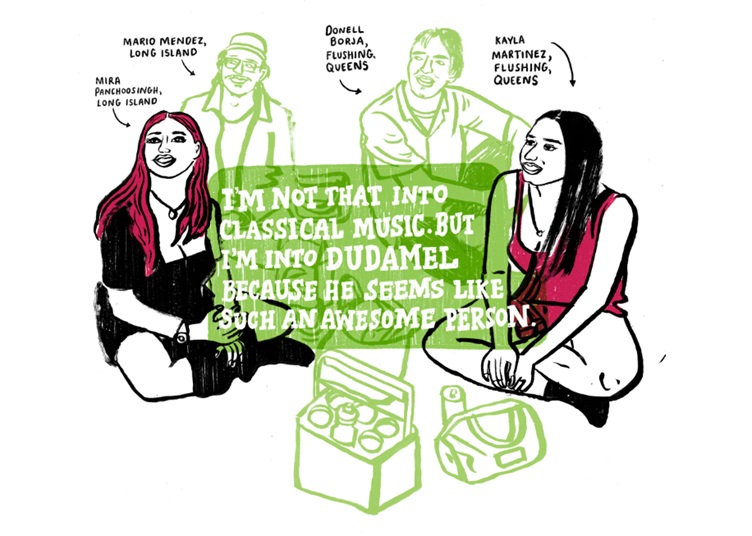
Since some of the comments aligned with audience relationship efforts to which arts organizations pay attention, I wanted to post a few.
This first one reminded me of John Falk’s categorizations of museum visitors which have pretty significant overlap with performing arts. Some people pursue experiences with celebrities or blockbuster exhibitions. Someone in this first group admits they aren’t a fan of classical music, but are attracted by Dudamel’s reputation which has spread beyond that particular niche.
Illustrations by Vidhya Nagarajan
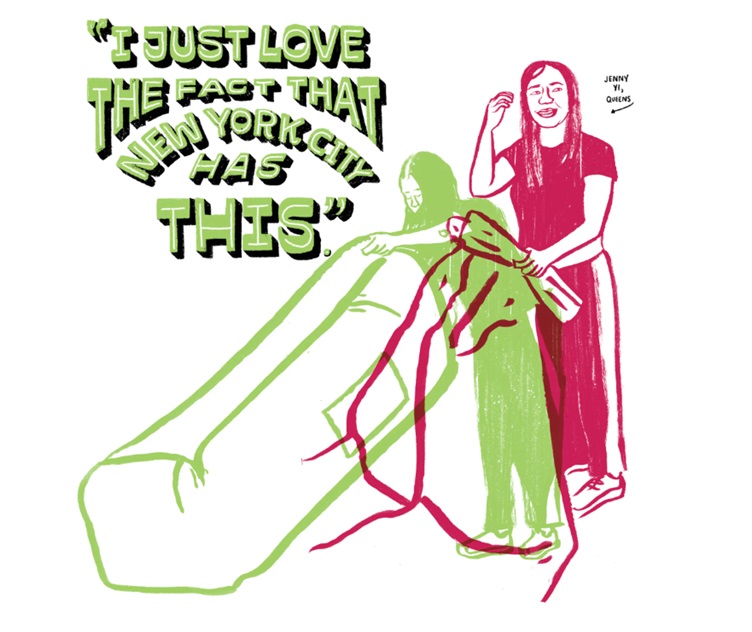
This next one I appreciated because it reflects the sense of value and place arts events can bring to a city or community. Obviously this person is actually attending an event, but research has repeatedly shown that people like to live in communities that have cultural amenities even if they don’t regularly avail themselves of those opportunities.
Part of many people’s identities are connected with the idea that they live in a place that has opera, galleries, theater…and outdoor concerts some distance from the formal symphony hall.
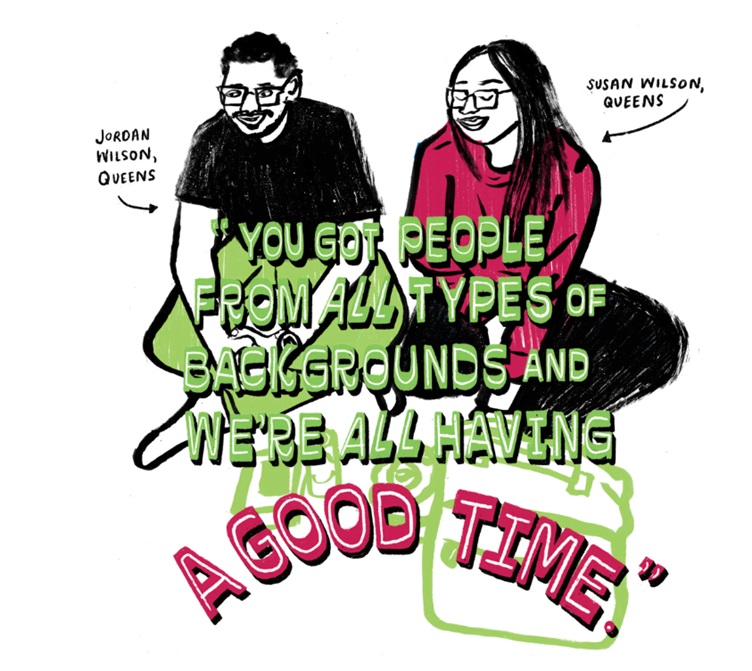
Similarly, people like to see other people of different backgrounds enjoying the same experiences they do. In the earliest days of the Macon-Mercer Symphony which performed at the hall I managed, many of those whom you might identify as being in the core classical music demographic were happy to see so many younger people attending the concerts. Some of the pieces that were programmed may not have been their cup of tea, but they were happy to see the seats filled and the lobby full of chatter and laughter.
According to a recent article in the Washington Post, while male attendance at Broadway shows generally hovers around 1/3 of audiences, a recent slate of plays labeled as “Bro Shows,” are seeing much stronger attendance from the male demographic.
These shows tend to be non-musical plays headlined by recognizable names: “Othello,” starring Denzel Washington and Jake Gyllenhaal; “Glengarry Glen Ross,” starring Bob Odenkirk, Kieran Culkin and Bill Burr; Kenau Reeves partnering with “Bill & Ted” bud Alex Winter in “Waiting for Godot;” George Clooney in “Good Night, and Good Luck.”
There is an acknowledgment that marketing of Broadway shows has typically been targeted at women who frequently make the attendance decision and all the arrangements around attendance but a different approach is being employed with these shows.
“Oftentimes, when we talk about finding the audiences, it’s often been targeting women and finding a show they can bring their partner to,” said Marc Jablonski, head of business intelligence for Broadway marketing firm AKA. “Now it’s the other way.”
[….]
“I can almost guarantee you there were guy friend groups on text threads being like, ‘Hey that guy from “Succession” is in “Glengarry,” we should go check it out,’” [producer] Johnson said.
The article also mentions that the productions are benefiting from the ability to more precisely target ads to men on social media platforms and streaming services.
Not every show has been successful, but enough have that more productions like an adaptation of the movie “Dog Day Afternoon” are planned with males as a primary target audience.
Government agencies tend to have a reputation for being dull, unimaginative, and rule bound. Speaking from experience, I can confirm there is good reason for that reputation.
I have to say though that the National Park Service social media accounts can serve as an exemplar for most commercial and non-profit enterprises. There is a engaging goofiness to their posts where they mix humor with educational content about the parks.
Interestingly, the best content seems to be on LinkedIn. Though since they don’t post the same content on every social media site on the same day, I may have missed some posts on Facebook and X that may have appeared further back than I scrolled.
For example, a post today on LinkedIn about splooting (basically animals splaying their bodies out to keep cool) appeared a couple days ago on Facebook.
💧Drink water often. Stay hydrated and drink before you feel thirsty. Plan to bring extra water just in case you need to place a cup on your dashboard to watch for concentric ripples portending the arrival of a large creature.
There was a really extensive post on Friday the 13th referencing all sorts of horror film lore while warning about approaching animals and living camp fires burning.
3: Like, he’s not that cute. 🦬
Oh my gosh, like, as if! That squirrel is, like, totally adorbs with its fluffy tail and those cute little paws. And that bison, like, needs a friend for sure, but, like, let’s not forget that squirrels can totally bite, especially from the bitey end, and that the bison has all the friends they need. Now, like, who packed the bandages and the extra leg splint?
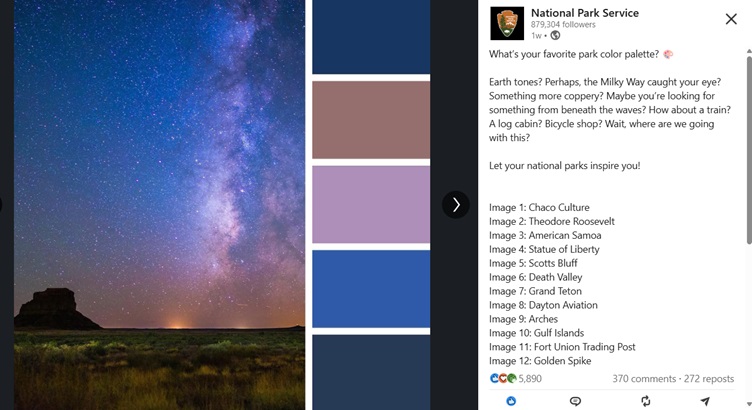
However, one of my favorite posts in recent weeks was one where they asked viewers what their favorite National Park color palette was and matched palettes up with 12 different National Park sites.
We talk about how arts organizations need to emphasize their value to their communities. National Park Service social media staff does a great job of communicating that value and capturing the national imagination.



Santa Cruz Shakespeare has several tiers of benefits for donors/members. Some, like season-announcement parties, are open to several tiers. Some,…